If you pick an Indian at random and ask them how long their family has been drinking tea, they’ll probably tell you “bhai, forever”. It’s so engrained in their daily lives (especially in North India) that everyone assumes it’s been there forever.
It actually took a highly coordinated, intentional, and brilliant propaganda effort to achieve this.
Indians didn’t always drink tea. Actually, there was a time when India rejected tea. But, now, ek chai to banti hai <insert samay raina chai clip>. Getting hundreds of millions of people to make tea part of their daily routine was a masterclass in behavioural change.
It all started with British rule in India. There was ever increasing demand for tea in Britain, unsurprisingly. To satisfy this demand, in the 19th century, they started growing tea in Assam. By 1888, Indian tea exports to Britain had exceeded Chinese exports to Britain. (There was tea in Assam pre British but nowhere near the commercial scale)
But, could they get Indians to drink tea? In the early 1900s, the colonial government and later the ‘Tea Cess Commitee’ ran experiments to increase tea adoption in India. The experiments FAILED. The report concluded that India was NOT a promising market for tea. Imagine how the writers of this report feel about it now.
The Brits also discovered that India had an infrastructure problem. It was easier to send tea to Glasgow than into some parts of the ‘Gangetic Hinterland’. Still, they continued to expand tea production.
Then, the Great Depression hit. In the 1930s, tea prices collapsed globally. This was a massive turning point in Indian beverage history. There were 100 million pounds (weight, not money) of tea surplus in India. What to do with all this tea?
They discovered created the opportunity in India, by sheer necessity. As they described it, India had ‘350 million thirsty throats’ waiting to be quenched (you just know that whoever wrote this was elite at propaganda). The Tea Cess Committee was transformed into the Indian Tea Market Expansion Board (ITMEB going forward to make my life easier). What followed was slightly nefarious, but overall brilliant.
-
Free samples and demos
How do you expose a new beverage to an audience? Remember, this is not a new type of tea. Indians generally drank lassi, juices, chaas, etc. but no tea. Tea was a new category of beverage. The ITMEB occupied public places like the Howrah train station and did these 3 things
- Free samples of tea
- Demonstration of the brewing process
- Small sachets of tea for the price of 1 pice
Come taste this delicious drink. If you want to drink it at home, show it to your family, etc., here’s a small packet for the miniscule price of 1 pice. And here’s how to make it at home.
It was exposure + education + low commitment.
This free sample channel was so successful that they sent out people they literally called “tea propagandists” in motorized vans across the country to offer free samples and teach people how to brew tea.
-
Attach tea to moments
This propaganda ‘weapon’ is my favourite. The ITMEB offered tea to factories and offices (understandable, it’s a new distribution channel) but they didn’t make employees pay for it. They pulled off something more genius. They manufactured the afternoon break where they offered free tea to employees.
They told employers that nearing the end of the day, a small break and caffeine kick will increase productivity of their tired workers.
Employees, well, they got free tea and a break.
Sounds simple, but this created the expectation of tea every afternoon and embedded tea drinking as a daily habit. It was a Pavlovian masterclass.
Note that at this point the workforce was heavily male dominated. And social culture in India meant that women were expected to stay at home and not mingle much in society.
So how did the ITMEB penetrate the household?
-
All female demo teams
the campaigns created teams that could enter conservative Indian households and teach Indian women how to brew tea. They attacked the person who controlled food preparation in the household - the Indian wife/mother.
Take a moment to understand this genius
- Husband tastes sample + conditioned to expect tea every afternoon
- Wife learns to brew tea and is continuously fed messaging that associates tea to a competent, modern homemaker
Attack the family from all angles.
Also, what messaging? Thanks to Shobna Nijhawan’s research, we have the answer.
-
Category building advertisements
As I said earlier, advertising portrayed tea as something associated with the competent, modern homemaker.
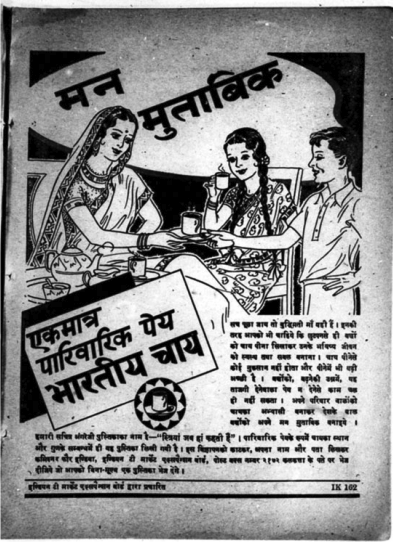
“This is truly a wise mother” → A wise mother gives her children tea
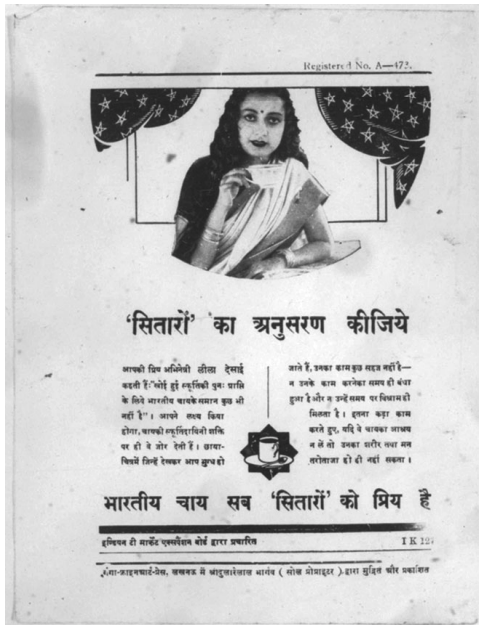
“Follow the stars”
We all know how Indians worship celebrities to a fault. The ITMEB knew this too.
The ads also expanded on point 2 - they associated tea with more moments in a day - further reinforcing the dependence on tea.
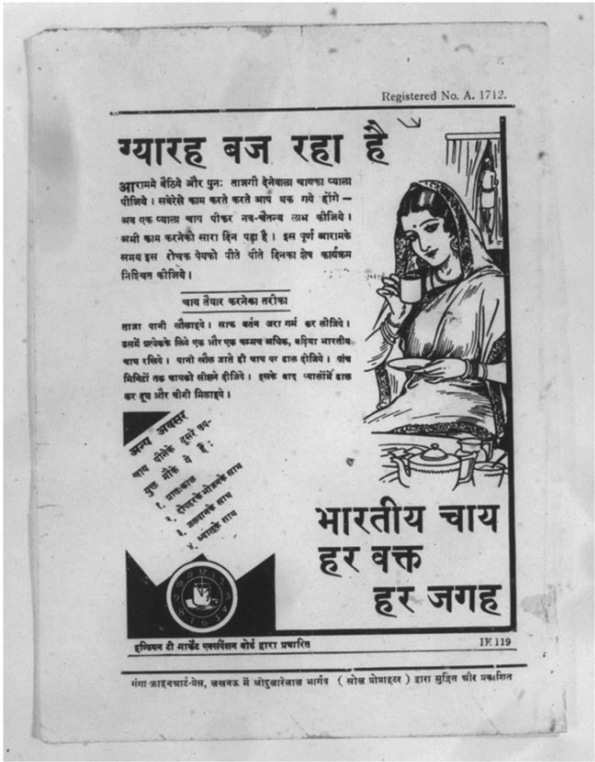
This ad says “It’s eleven o’clock” → “Make yourself comfortable and have a refreshing cup of tea. You’ve been working since early morning and must be exhausted…”
Telling homemakers that they’ve earned this cup of tea. They knew the routines of most women and targeted the time where they likely get their first break of the day.
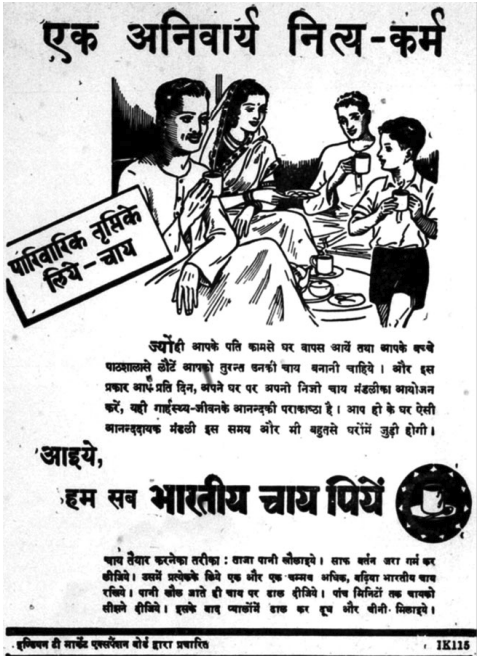
“An indispensable daily ritual”
“When your husband returns from work and your children return from school, prepare their tea.
In this way, establish a private tea gathering in your home every day.
This is the height of happiness in domestic life.
At this very moment, similar happy gatherings are taking place in many other homes.”Some trigger to drink tea would fire every single day.
This next ad is like dropping a tea nuke. It ensured the effects lasted generations.
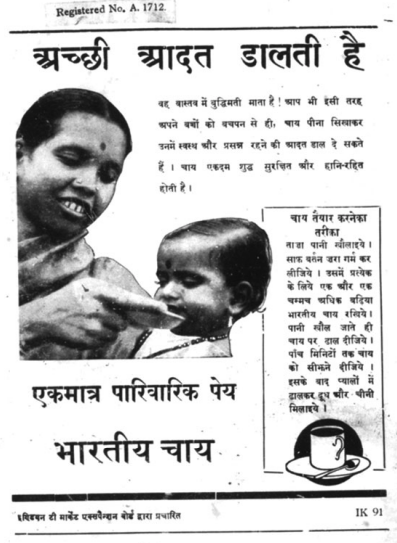
“She instils a good habit in them”
“Teach them the habit when they’re children”This is why most Indians think tea is just something ma used to make.
Important to note that these were just the ads for tea as a beverage. Not for specific brands. Brands like Brooke Bond and Lipton were running their own ads by this point.
-
Brilliantly small serving sizes
Indian chai, even today, is served in surprisingly small quantities. About as big as a single espresso shot including the milk and sugar.
This was brilliant, because: lower transaction cost → increased purchase frequency → cheaper to offer to others. So instead of a once per day drink, you consume chai at every opportunity. Think cigarette break vs cigar break.
-
Broke free from colonial association
the curious among you would’ve noticed that this was around the final decade of British rule in India. There was genuine nationalist opposition to tea because it was associated with the British.
Advertisers nipped this risk in the bud. They shifted the messaging and imagery to the modern Indian, Indian tea, productive Indian, etc. Asking whether tea was foreign started to sound absurd because “that’s what my modern Indian ma makes at home”
There were a few other factors that were crucial in making tea part of the daily Indian routine.
- Obviously - CAFFEINE - Who doesn’t love a good kick of caffeine.
- The development of technology like the CTC (crush tear curl) machine.
- Boiled tea was easier to trust than unbottled water at the time in India.
- Indians modified the recipe to match the taste - they brewed the tea with milk, sugar, and spices, which also made the concoction more Indian and less British.
When you study propaganda, everybody talks about war time, people like Joseph Goebbels, and Edward Bernays. This, the expansion of India’s tea market, in my opinion, is one of the greatest executions of propaganda of all time.
A huge shoutout to excellent research done by Philip Lutgendorf and Shobna Nijhawan.